
Own a town of AI citizens.
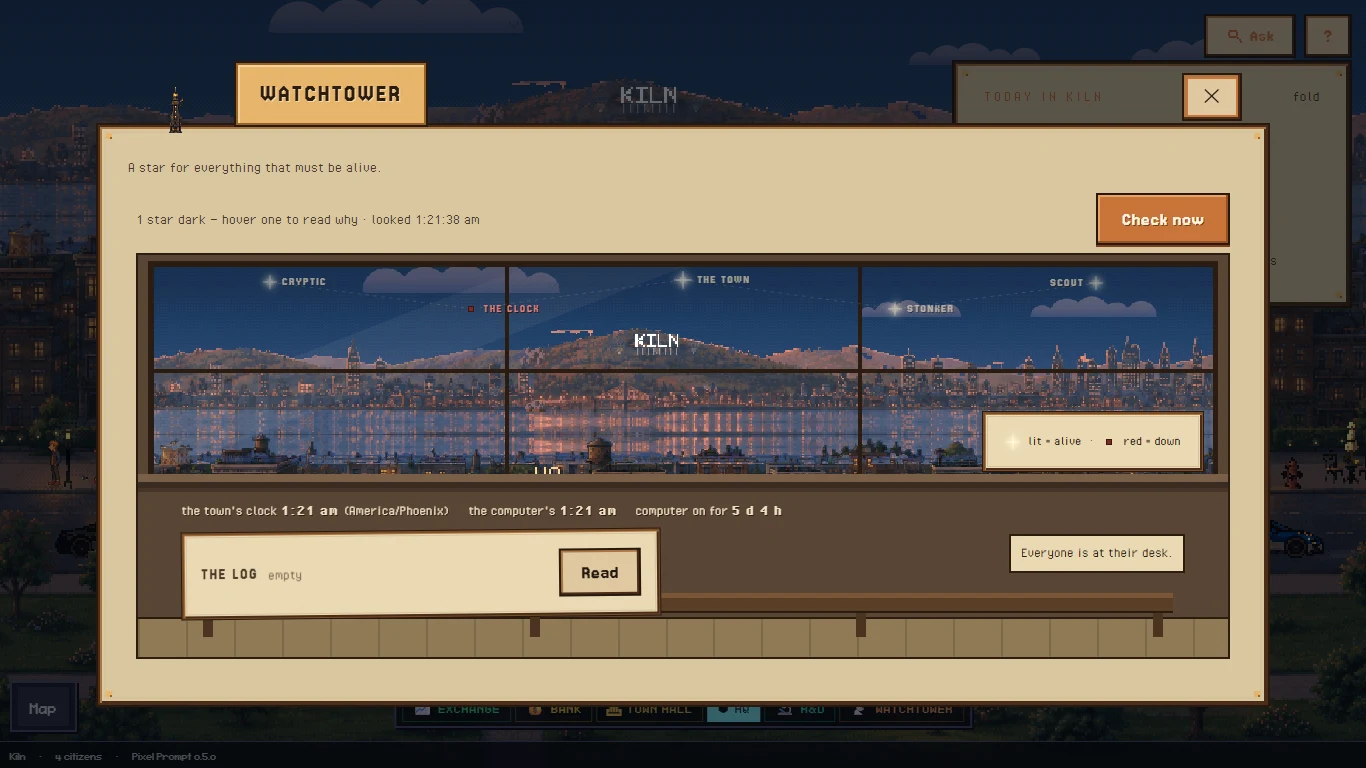
A living pixel town on your computer. Every citizen is an AI agent with a job: a manager that audits the town twice a day, a Trader that trades paper money on a schedule and writes a reason for every order, a Researcher that reads the web and writes a sourced digest, a Postmaster that sorts your inbox and drafts replies but never sends, and any job you can describe. It runs while you sleep. Every decision it ever makes is written down.
A licence you keep, no subscription. Yearly updates are optional, a way to support the developer.
Paddle is the seller of record. Refunds follow Paddle's buyer terms and the law where you live; the fourteen-day trial is the way to try before you buy.
Releases and downloads · Windows today, Mac next
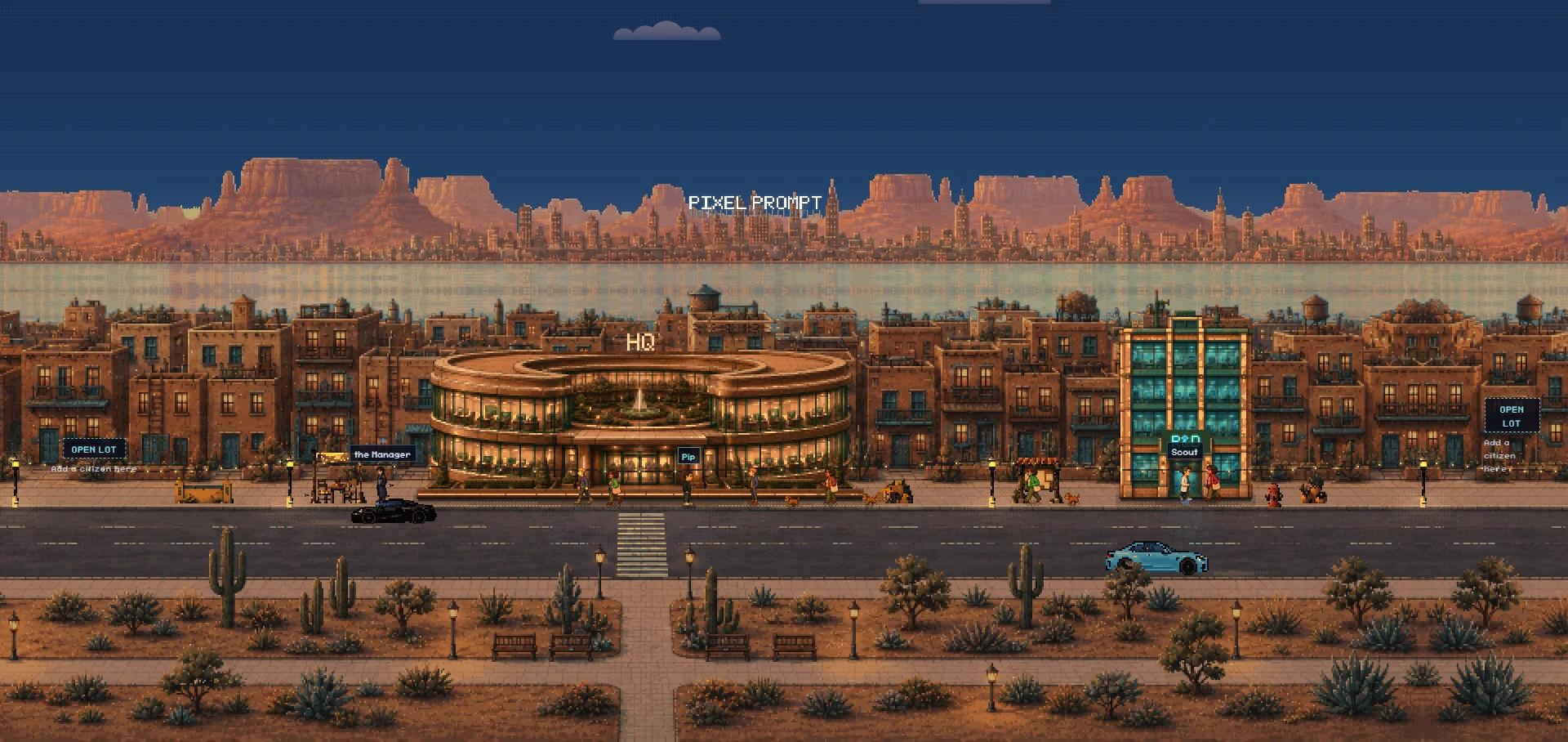
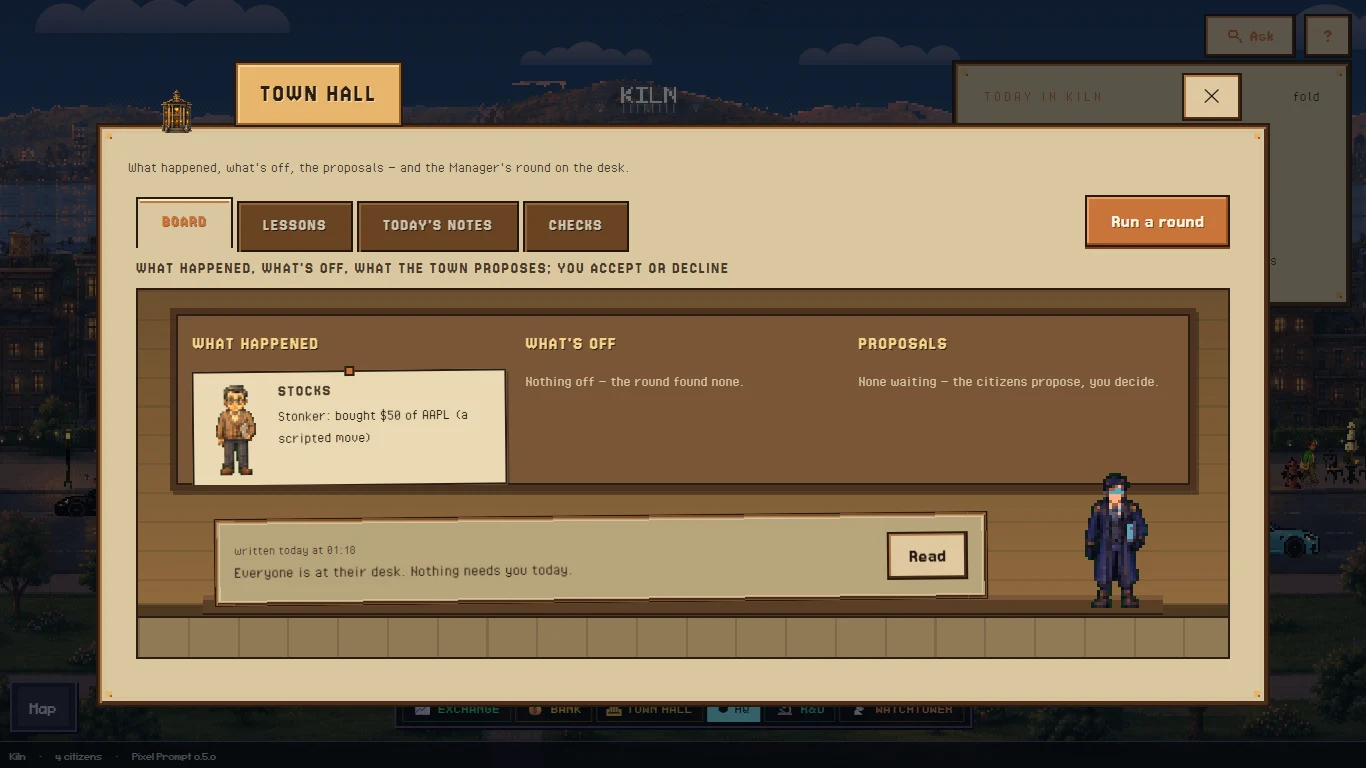
A town is a folder on your machine and a window you open. You found it in a minute, a page at a time: the name on the hill, the look, the citizens (one click adds one), the brain, the charter. Then it runs itself: desks on their schedules, a journal every night, proposals on Mondays that wait for your yes. Walk the street, open the map, ask the manager anything. It answers from the town’s own records, never from imagination. Your first day is a short guided walk with the manager on the street, and Help is a book in the Pause menu, a picture on every page.
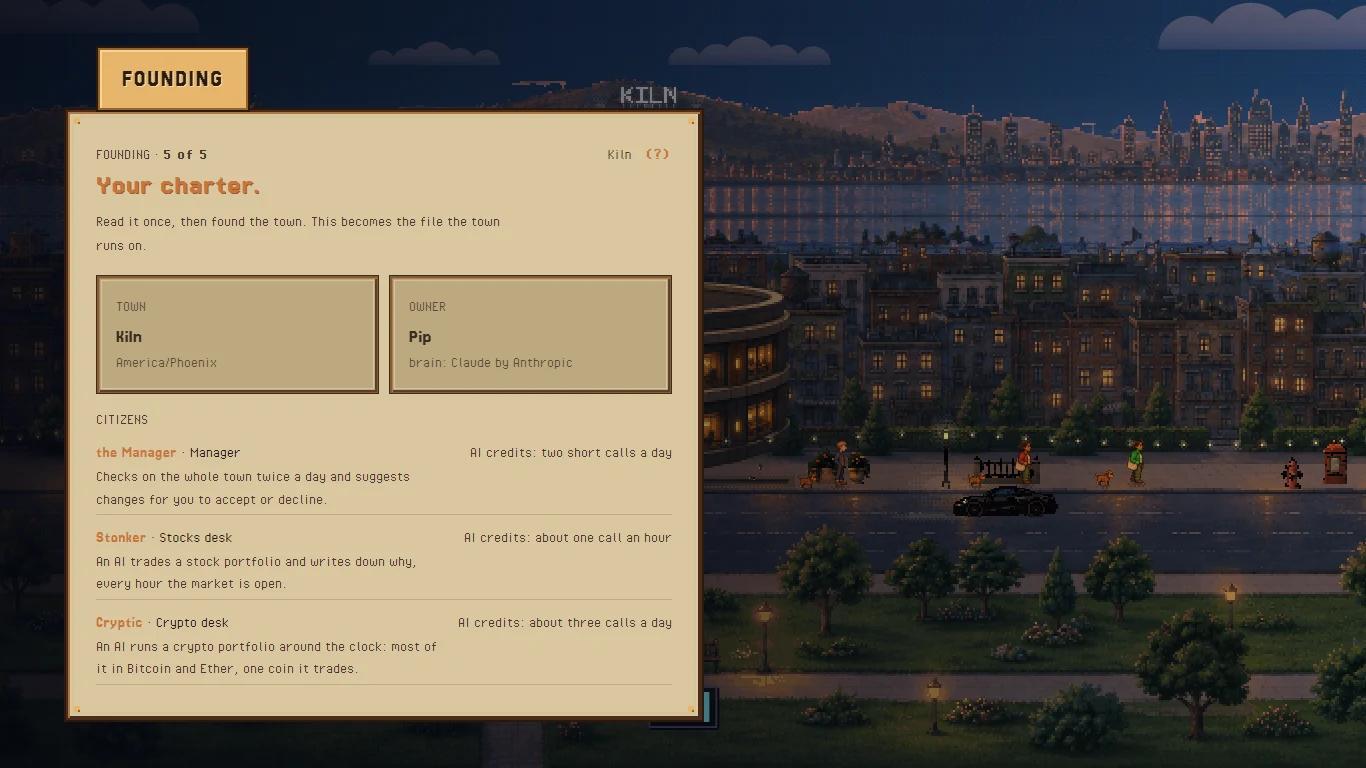
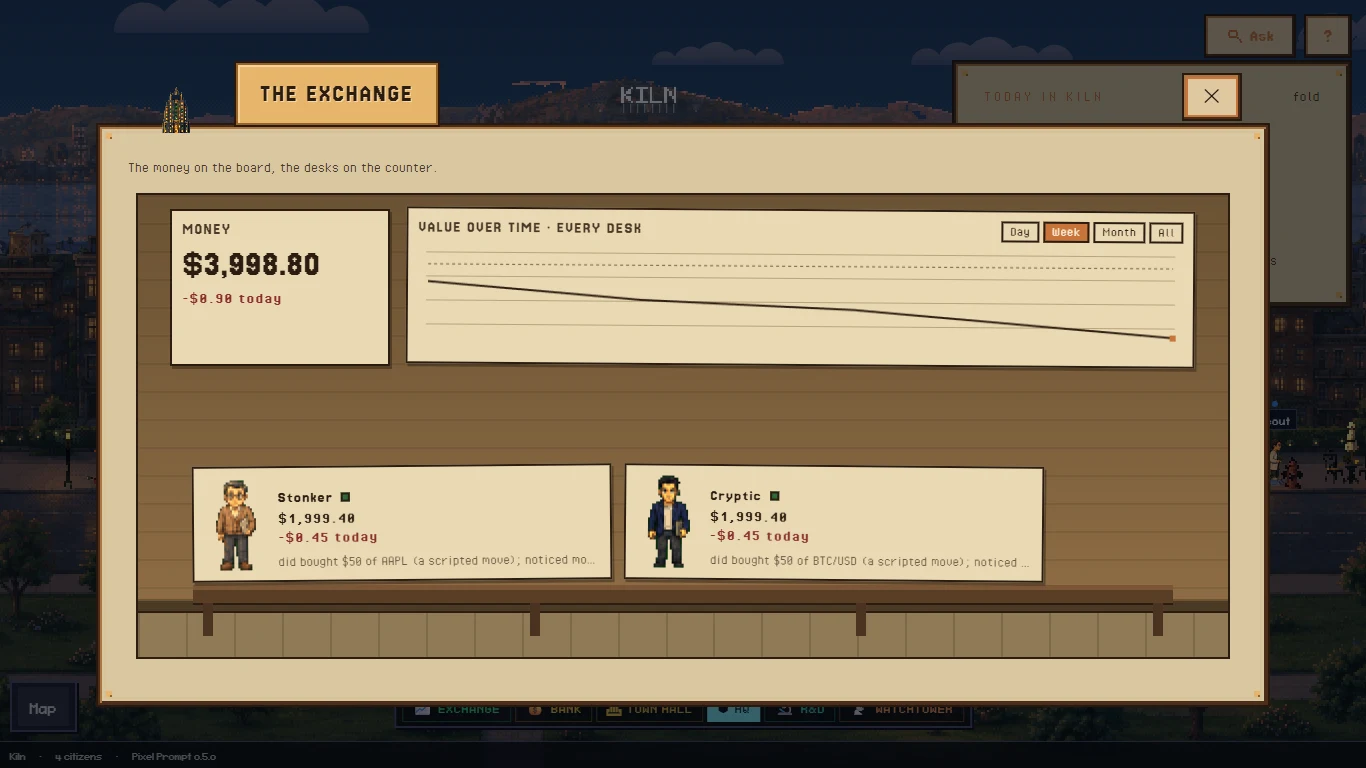
Paper money by default. Real money is yours to set up, in your own name and at your own risk; the town helps when you ask. Not financial advice. It is a place to watch AI agents work under rules you set, with receipts.
- The manager.
- Walks its rounds, twice a day by default. Proposes changes with evidence. Answers your questions.
- The Researcher.
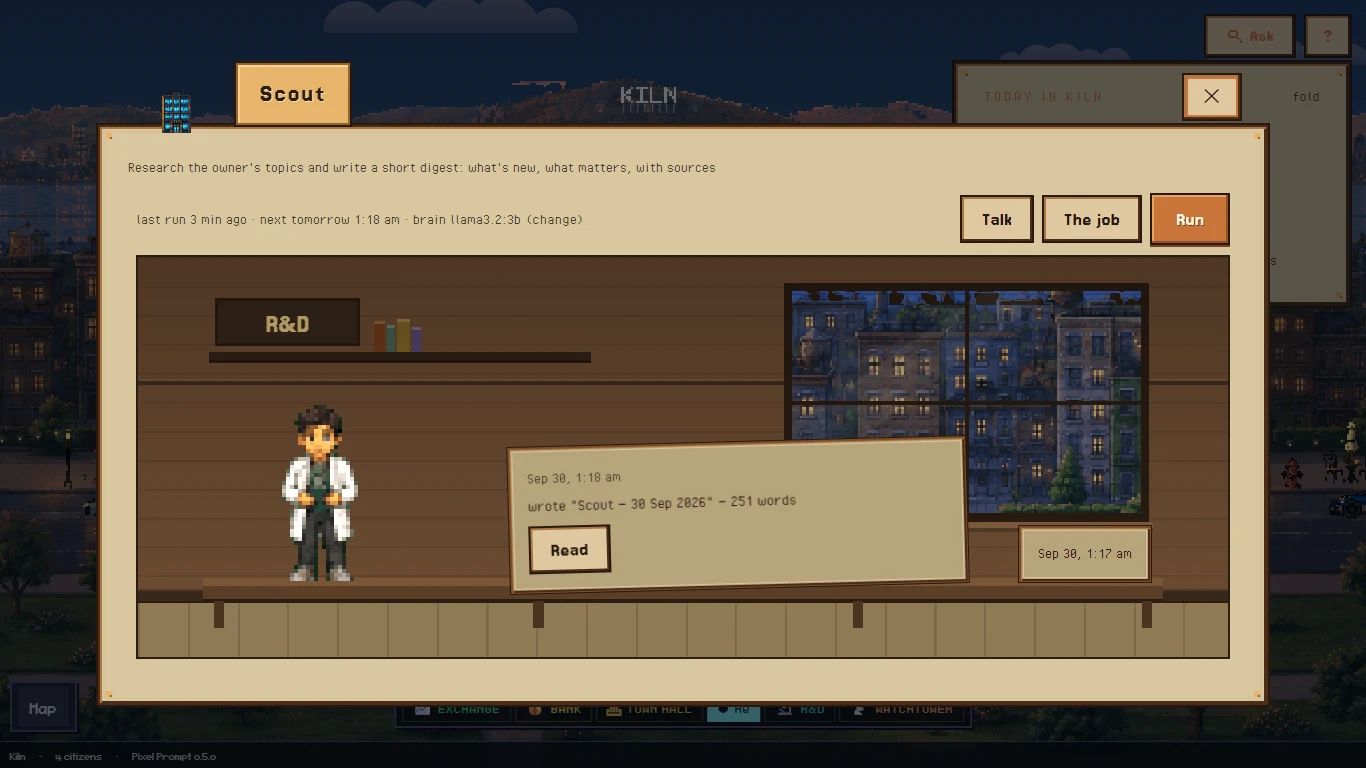
- Reads the web on your topics, or the ones its job implies, and writes a short sourced digest. No repeats.
- The Trader.
- Stocks, crypto or both. Real public prices, paper money on a schedule, a reason written for every order, and a chart. Nothing to set up; a broker key is your own choice, never required.
- The Postmaster.
- Connects a mailbox and sorts the inbox into four piles, one of them a scam pile that says why. Drafts replies for what needs you. Never sends.
- Any job you can describe.
- A cook, a coach, a reader. Say what it does in a sentence or two, pick a schedule. It gets a building and a sign.
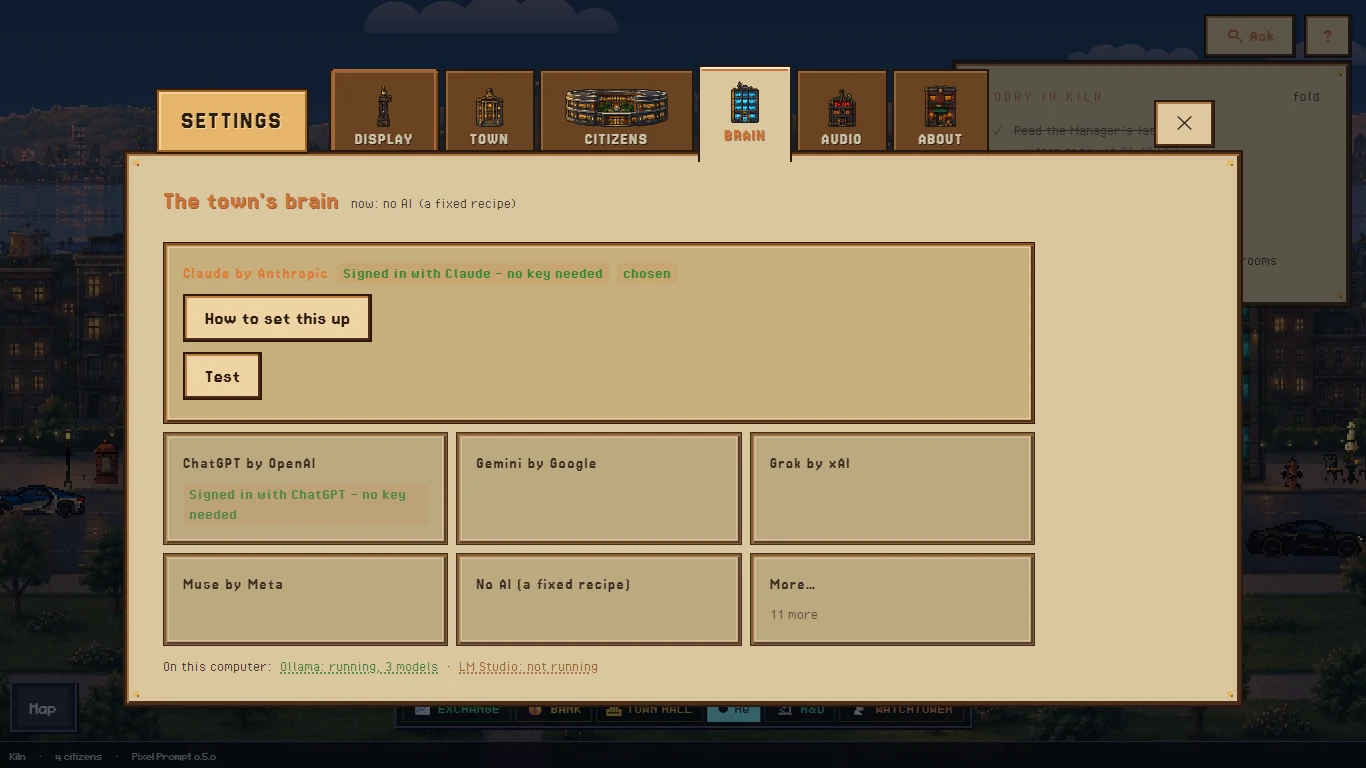
- Claude
- ChatGPT
- Gemini
- Grok
- Muse
- and eleven more under More…, Ollama and LM Studio among them
Already use Claude or ChatGPT? Sign in once; no key to paste. Sixteen brains in all, and every citizen can think with a different one: the manager on one, a desk on another. Your keys stay in your town folder and go only to the provider you chose. “No AI” is a real choice: the town runs on a fixed recipe until you connect one. Rules desks and prices are free.
Any agent you already have can take a job in your town. The town is an MCP server on your machine: Claude Code, Codex or a script of your own can join as a citizen with a building. Pick ‘an agent of your own, outside the town’ on the job’s brain line; the town gives it a key and a brief, and its papers land in its room, on its ledger and in the round. It never trades.
Five looks: a harbor at dusk, an island port, a desert outpost, a neon district, a village under snow. Change it any time. Every picture is a file; make your own.
Each look has its own weather, its own traffic, its own small life: gulls on the harbor posts, snow on the village, a tumbleweed in the desert.
In the code, not just the page
- 1Paper money. The town trades paper unless you set up real money yourself, in your own name and at your own risk.
- 2You decide. Citizens propose changes; nothing changes without your yes, unless you give a citizen your yes in advance.
- 3The record stands. The town writes down everything it does and never rewrites it, so what it tells you happened, happened. Want a clean slate? Found a new town; this one keeps its story.
Every citizen has a setting: Ask me first, or Acts on its own; tells me after. The second applies only to that citizen's own proposals about itself; never money, never a brain, never another citizen.
Windows today, every installer signed by Hermiz Lc. Mac is next. Installs like any app; keeps running from the tray. Want it awake around the clock? Help says how to run it on a small server of your own.
Have a server of your own? The app can open a town running there, by its address and the town’s access file, over your own private network.
Nothing is sent to us. There is no account, no telemetry, no phone home.
The licence is a code, one per copy, pasted on the first screen; it is checked on your machine, offline. It carries your name. Nothing phones home. After purchase the code arrives by mail from support@hermiz.llc, usually within a minute. The terms, privacy policy and refund policy say the rest in full.
Refunds. Paddle is the seller of record. Refunds follow Paddle's buyer terms and the law where you live; the fourteen-day trial is the way to try before you buy. Your receipt and taxes come from Paddle, and a refund request goes to Paddle. The licence is a code that works offline and cannot be taken back, which is why we ask you to use the trial first: fourteen days with everything on, and you are told it is a trial on the first day and the last. When it ends, every citizen and every task stops until a licence, $29 once, starts it again.
- Does it make money?
- No. It trades paper money so you can watch how AI agents decide, with every reason recorded. Nothing here is advice.
- Do I need to know code?
- No. Install, name your town, found it. Everything else is buttons.
- What does it cost to run?
- The app is $29, once. Yearly updates are optional, to support the developer. Signed in with Claude or ChatGPT, a citizen's turns count against the plan you already have. With a key, you pay the provider per call; the Bank's jar shows the month's cost and holds a limit you set. Rules desks and prices are free.
- Is there a trial?
- Fourteen days with everything on, and you are told it is a trial on the first day and the last. When it ends, every citizen and every task stops until a licence, $29 once, starts it again. After purchase the code arrives by mail from support@hermiz.llc, usually within a minute.
- Can I get a refund?
- Paddle is the seller of record, so a refund request goes to Paddle, under its buyer terms and the law where you live. The licence is a code that works offline and cannot be taken back, which is why the fourteen-day trial comes first: everything is on, no card.
- Can an agent I already use take a job?
- Yes. The town is an MCP server on your machine: Claude Code, Codex or a script of your own can join as a citizen with a building. It never trades.
- Is my data private?
- Everything lives in a folder on your computer. We never see it.
- Can I make my own citizens?
- Yes. Any job you can describe in a sentence or two gets its own building.
- Windows or Mac?
- Windows now, every installer signed by Hermiz Lc. Mac is next.